
Carers Week 2026 – Behind every patient, there is an informal carer making a difference to their day-to-day quality of life
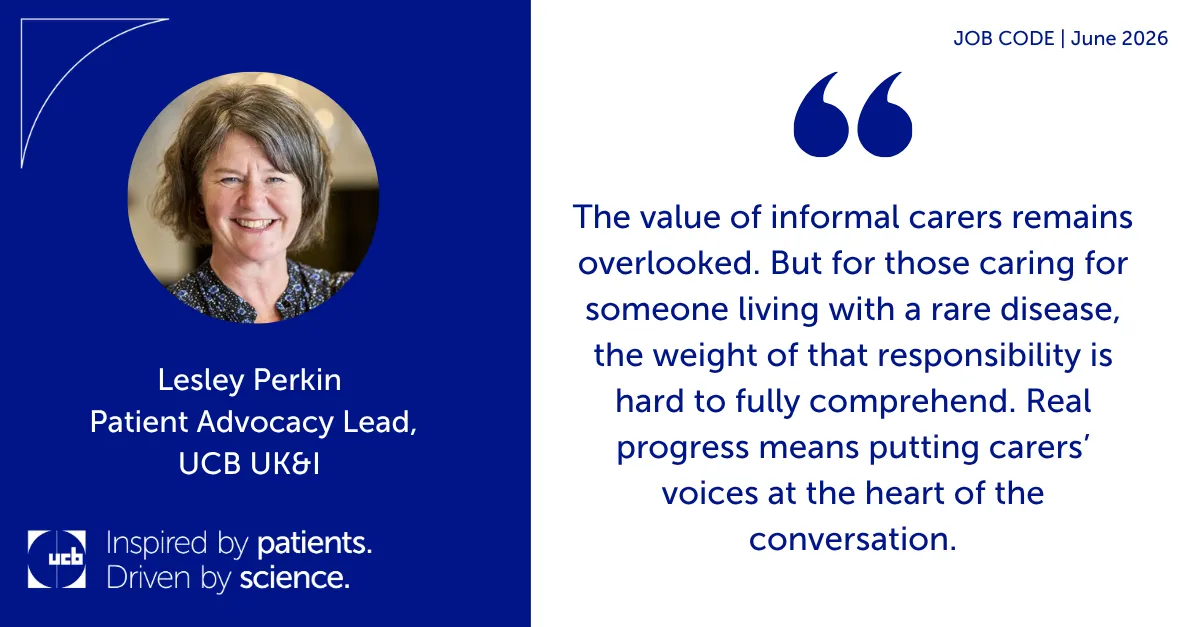
It is a stark reality that throughout the treatment journey, patients experience fragmented care and lack of appropriate support. Yet there is one vital, often overlooked constant, becoming critical to their treatment adherence, emotional support, and day-to-day disease management – the carer.1
Though pivotal in their role, the 5.8 million unpaid carers in the UK are often left out of discussions around policy, access and innovation.2,3 As healthcare becomes more decentralised and digitally-led, carers are relied-upon to shoulder the responsibility. An analysis from the Centre for Care found the economic value of care across the UK to be an incredible £184 billion per year, equivalent to the yearly national NHS budget.4,5
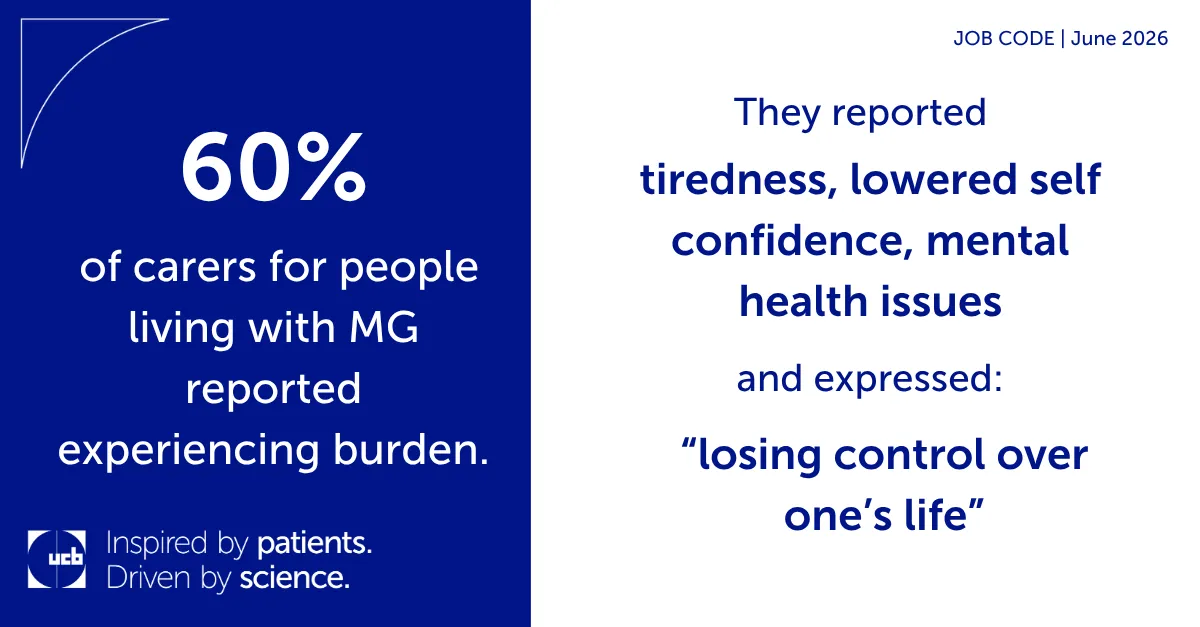
Whilst carers are left behind across many conditions, the most impacted are those caring for people living with a rare disease, such as Dravet syndrome (DS) or myasthenia gravis (MG), which involve taking on a diverse range of responsibilities, often resulting in difficulties experienced by the carers themselves.6,7
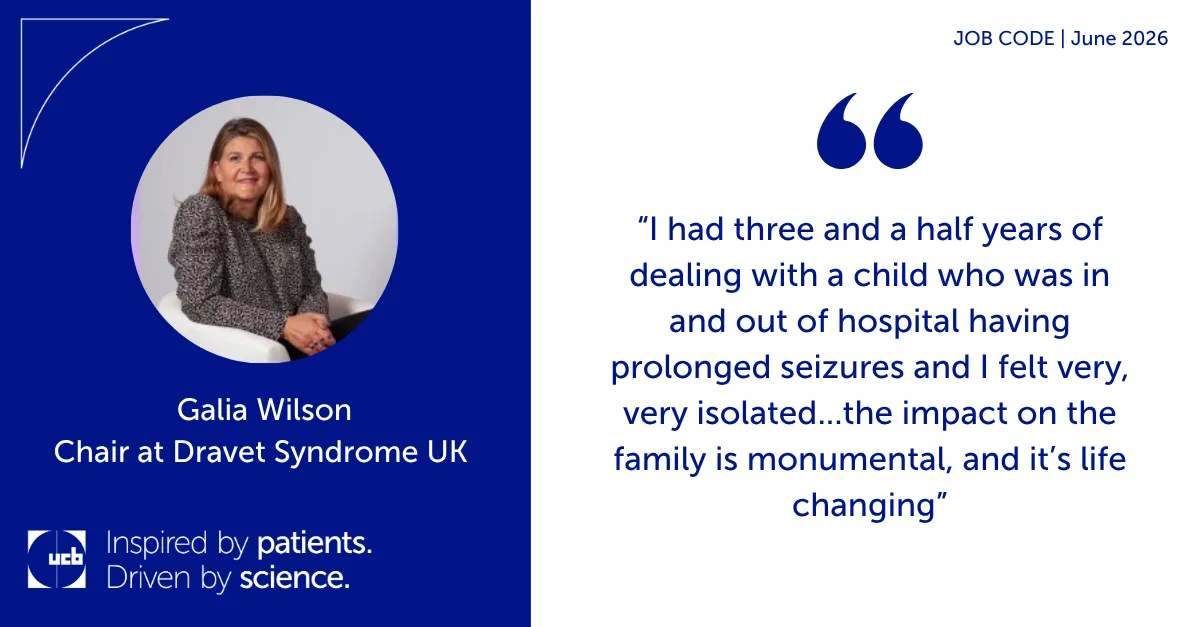
As we celebrate Carers Week, as well as both Dravet and MG Awareness Month throughout June, I want to highlight the amazing work that carers like Galia Wilson do. Galia cares for her son living with Dravet syndrome and having recognised the need for a community and better support, she created Dravet Syndrome UK in 2006 alongside other parents; it is the only UK organisation dedicated to improving the lives of those affected by Dravet Syndrome.
Carers frequently coordinate complex care, particularly for chronic, rare, and complex conditions. Information is shared ineffectively between services, leading to persistent inconsistencies to care, making the role of a care coordinator essential. As this is generally not well coordinated in the UK,1 the burden often falls upon the carer.8
Digital and AI-enabled tools have the growing potential to reduce administrative tasks, improve coordination and support more personalised care. But these technologies will only be able to deliver meaningful benefit if carers are actively included in their design and implementation.9 This is particularly important as care needs differ across conditions and life stages, requiring flexible, personalised support models rather than one-size-fits-all solutions.
As these capabilities evolve, success must be measured not only by clinical outcome, but by their real-world, lived impact, and their ability to:
💜reduce diagnostic delays
💜ease the coordination burden
💜improve the quality of life for both patients and their carers
At #UCBUK and #UCBIreland, we know that delivering real benefit to patients requires approaching support services, education, and coordinated treatment as central elements of care, not just ‘add-ons’. We remain committed to standing alongside carers across the UK, advocating for their recognition and inclusion in conversations around improving the treatment pathway, this week and beyond.
Head to our UCB UK & Ireland LinkedIn channel to read more about the work we do in the rare disease space.
References:
1. Walton, H., et al. (2023). Experiences of coordinated care for people in the UK affected by rare diseases: cross-sectional survey of patients, carers, and healthcare professionals. Orphanet journal of rare diseases, 18(1), 364. https://doi.org/10.1186/s13023-023-02934-9 Last accessed: June 2026.
2. Key Facts and Figures about Caring. Carers UK. Available at: https://www.carersuk.org/policy-and-research/key-facts-and-figures/ Last accessed: June 2026.
3. New analysis reveals dwindling support for unpaid carers at odds with policy rhetoric. Nuffield Trust. Available at: https://www.nuffieldtrust.org.uk/news-item/new-analysis-reveals-dwindling-support-for-unpaid-carers-at-odds-with-policy-rhetoric Last accessed: June 2026
4. Carers UK / Centre for Care. Valuing Carers 2021/22: the value of unpaid care in the UK. Available at: https://www.carersuk.org/media/mfbmjbno/valuing_carers_uk_v3_web.pdf Last accessed: June 2026
5. Rising numbers of unpaid carers say they need more support form the NHS. Carers UK. Available at: https://www.carersuk.org/press-releases/rising-numbers-of-unpaid-carers-say-they-need-more-support-from-the-nhs/ Last accessed: June 2026.
6. Mcmullan J, Lohfeld L, McKnight AJ. Needs of informal caregivers of people with a rare disease: a rapid review of the literature. BMJ Open 2022;12:e063263. doi: 10.1136/bmjopen-2022-063263
7. Dewilde S, et al. Caregiving burden among caregivers of people with myasthenia gravis. Orphanet J Rare Dis. 2025 Jun 19;20(1):311. doi: 10.1186/s13023-025-03842-w
8. CONCORD: CoOrdinNated Care of Rare Diseases. UCL Polulation Health Sciences. Available at: https://www.ucl.ac.uk/population-health-sciences/epidemiology-health-care/research/behavioural-science-and-health/research/health-care-organisation-and-management-group/concord-coordinated-care-rare-diseases? Last accessed: June 2026
9. A plan for digital health and social care: Gov.UK. Available at: https://www.gov.uk/government/publications/a-plan-for-digital-health-and-social-care/a-plan-for-digital-health-and-social-care Last accessed: June 2026
IE-DA-2600233 | June 2026
Choose a Country
- Global Site – English
- Australia – English
- België – Engels
- Belgique – Anglais
- Brasil – Português
- България – Български
- Canada – English
- Canada – Français
- 中国 – 中文
- Česká Republika – Angličtina
- Danmark – Engelsk
- Deutschland – Deutsch
- France – Français
- España – Español
- Ελλάδα – Ελληνικά
- India – English
- Ireland – English
- Italia – Inglese
- 日本 – 日本語
- 한국 – 한국어
- Luxembourg – Anglais
- Luxemburg – Engels
- Magyarország – Angol
- México & Latinoamérica – Español
- Nederland – Engels
- New Zealand – English
- Norge – Engelsk
- Österreich – Deutsch
- Polska – Polski
- Portugal – español y portugués
- România – Engleză
- Россия – Русский
- Slovensko – Anglický
- Suomi – Englanti
- Sverige – Engelska
- Schweiz – Deutsch
- Suisse – Français
- Türkiye – Türkçe
- Україна – Англійська
- United Kingdom – English
- U.S.A. – English